和太鼓という楽器と、八丈太鼓という演奏スタイル、音楽というもの、それをめぐるぼくらのグルーブな日常について できるだけ面白おかしく分かりやすく書いています。 沢山の人に読んでもらうのを過剰に意識してますが、まったく高尚なものではなく、疎にして雑。目くじら立てずに読んで下さい。
 This is personal blog I write about wa-taiko, Japanese drum, style of Hachijo-taiko, music itself and our groovy lives. I write them with humor, amusing way and easy for understanding as much as possible. I am conscious in large in surplus, but it is not so lofty, might be miscellaneous. Please don't flay and do enjoy to read.

2014年7月20日日曜日

太鼓の音の表記のしかた

 もちろん太鼓に限った話ではなく音楽全体での話ですが、ベースのリズムや他の音があると、曲やフレーズがより複雑に深くなり楽しくなります。いわゆるセッションの醍醐味です。
 八丈太鼓もベースのリズム(下打ち)と自由なフレーズでの演奏(上打ち)の組み合わせです。下打ちと、上打ち、つまり上と下と言いますが、セッションで聞かせる太鼓にします。

 例えば、

♪、♪、♪、♪、♪、♪、♪、♪・・ の下打ちに対して
♪、♪、♪、♪、♪、♪、♪、♪・・ の上打ち。

♪ ♪、♪、♪、♪、♪、♪、♪・・ の下打ちに対して
 ♪、♪、♪、♪、♪、♪、♪、♪・・ の上打ち。

①は表打ち基本、②は裏打ちの基本です。

①をずっと繰り返していると単調になってくるのですが、そこに②を時々挟むと、太鼓にちょっと活気が出ます。

また裏の音をあらわす際、学校では、「ント」と教えられましたが、僕が習っている太鼓では、「スト」と表します。
トントト、トントト、トトスト、ストトト ・・・
のような感じです。

八丈太鼓をあえて譜面にすると、
とととと、とととと、とととと、とととと、とととと、とととと、とととと、とととと、
トントト、トトスト、トトトト、トントン、トントト、トトスト、トントト、トントン

などと書いたりします。(ひらがなは下打ちの部分)

五線譜の楽譜が苦手な僕にはこれが、便利です。
とととと、とととと、とととと、とととと、
トントト、トトカト、トトカカ、トントン。

ちなみに、「カ」は、太鼓のふちをたたく音です。

とととと、とととと、とととと、とととと、とととと、とととと、とととと、とととと、
トンカト、カカトト、カトトカ、トカトカ、カカスト、カカトカ、トカカト、トトスト、

ちょっと挑戦してみてください。楽しいですよ。

Tatete-uchi


nekase-uchi : The moment of attack, the angle between taiko's face and bachi(stick) is close to 0 degrees.
tatete-uchi : The moment of attack, the angle between taiko's face and bachi(stick) is close to 90 degrees.

 First of all, I have to say I am not saying your play style is wrong, even if you do 'nekase-uchi' when you play taiko. I am writing this very nervously, because most of taiko player from professional to amateur seem to play it by 'nekase-uchi'.

 Do 'tatete-uchi', I have been coached from my master from beginning. 
Depending on style and music, nobody say which 'nekase-uchi' or 'tatete-uchi' better is, but I think 'tetete-uchi' is rational for making sound, and the way you feel less physical stress, especially on your wrists.

 Because of playing taiko long time, player got wrist pain or sever inflamed of wrists , I have heard often. I think 'nekase-uchi' might cause such sympton.

 Meanwhile, I and my friends who is doing 'tatete-uchi' sytle have not gotten such experience for almost 10 years.
 'Tatete-uchi' allows you make taiko's variable sounds, anyway. 
With Tatete-uchi, bachi attacks pinpoint on face of taiko and can make sharp(keen?) sounds according with your handling such as swinging and hitting of the play.

 Let's try as much as you are forgiven with your master and the traditional style that you are learning.
'Tatete-uchi' might be little bit difficult until you got used to it, but there are variable things, if you grab! 


2014年7月13日日曜日

ばちを立てる


和太鼓をたたいている人たちを見るとプロからアマチュアまで、幅広くほとんどといっていい人がばちを寝かせて叩いているように見えるので、ほんとうは恐る恐るこれを書いています。以下、ばちを寝かせてたたくのが間違っていると書いているわけではないですよ。前もって。。

僕は太鼓はばちを立てて打つ指導を受けてきました。 流儀や曲によりけりですので、一概には優劣を言えることではないですが、ばちを立てての打ち方は、音的にとても合理的で、物理的にも腕に負担のかからない方法だと思います。


 和太鼓をすると手首を痛めたとか、けんしょう炎っぽくなったという人がいますが、ばちを寝かせて激しく叩くと手に相当の負担が来るのでそれが原因かもしれないと思います。
 10年近く太鼓をまあまじめにやってきて、僕は一度も手首を痛めたことも、けんしょう炎ぽくなったこともないです。ぼくといっしょにやっている人たちもです。

 あとは、なによりも、ばちを立てて打つと音のヴァリエーションが豊富になります。無論僕はまだそれほど偉そうに言うほどの域には達していないですが、ばちを立てると物理的に、太鼓の面に触れるのがよりピンポイントになり、鋭い音づかいができるからだと、僕は思います。

 もしよろしければ流儀やご指導の先生の琴線に触れない程度に、試して下さい。なれない人にははじめはちょっと難しいと感じるかもいしれませんが、やってみる価値はあります。

2014年7月6日日曜日

How do you play taiko?

face to face
I have written that most of people think Wa-daiko players(male) must wear 'fundoshi'. Also many people think strongly they should play Wa-daiko by face-to-face (to the taiko surface) manner.

 At festival etc., people who line up to try to play, look like as hitting robust door with both fists and shouting "Open! Please open! I am innocent!!".

Of course this way of playing taiko is not wrong. Instead, Many style of playing wa-daiko, people do this way. So it looks quite standard. See Bon-odori taiko, Buddhism Matsuri with dance.
on the ground
Or, you can put taiko on the ground(surface of taiko is upper side) and play move both arm same way.

Anyhow, my playing taiko style is yoko-uchi (yoko means 'side', not a girl's name in this case.) , facing one side of my body to the surface of taiko.
 I sincerely think this style let my arms and body move very wide range. I move body dynamically such as dance or martial art. I can take the distance very long and also very short between bachi(sticks) and the taiko's face. So, with this style, I am still feeling difficulty of playing taiko as music. With this 'yoko-uchi' style, you feel all the body parts hands, arms, shoulders, body, hip, legs and feet are connecting bachi, and become a flexible structure. (Am I explaining it well in English?)

Although, I’ve heard the original Hachijo-taiko is face-to-face style. I have seen that ladys with kimono were playing taiko. That was very beautifull. I would like to introduce it some day.


Yoko-uchi

2014年7月5日土曜日

太鼓と撥のアプローチ

 太鼓と言えば、フンドシ! というイメージが根強い、といったお話しを書いた覚えがあります。そして、そういえば、太鼓と言えば正面で打つという、強烈なイメージも大衆のおのおの方にはあるようです。

 祭りやイベント毎といった出演の際に、飛び入りの人に撥を与えて太鼓に導く時や、初心者が太鼓に鼻息も荒く立ち向かうのを見ると、必ずと言っていいほど太鼓を正面に見据えて、ハッスルされようとします。 
正面打ちの太鼓
地面に太鼓据えるスタイル


 もちろん、これらのたたき方は決して間違いではないです。それどころか、多くの和太鼓の流儀はこのように打つのです。盆踊りなんかそうですね。あるいは太鼓を地面に置いて打つ流儀もありますが、こちらも場合も同様に正面で叩きます。

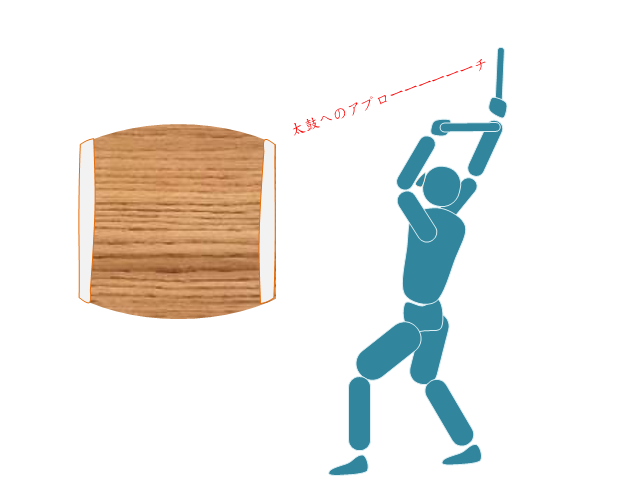
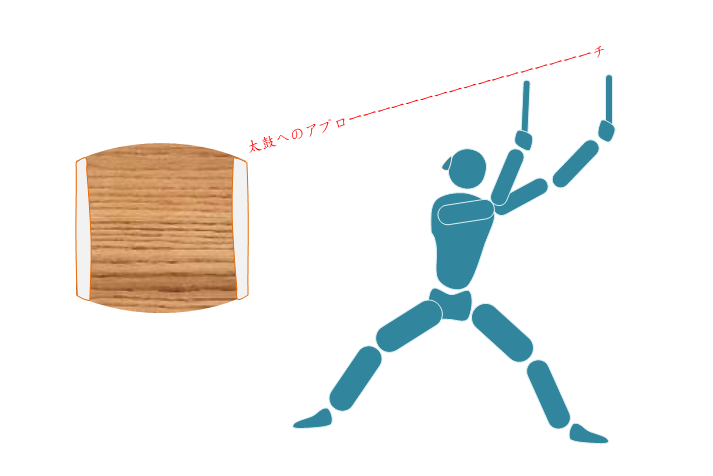
 さて、僕がしている八丈太鼓のスタイルは、横打ちです。練習していてつくづく思うのですがこの流儀はとても可動範囲が広く、時には踊りや武道のように体をダイナミック動かします。撥と太鼓のアプローチ(距離)を長くも短くもでき、音楽としての太鼓の難しさを感じます。撥につながる、手、腕、肩、胴、腰、足、の全てが太鼓の音を響かせるための道具となります。 
 体を正面から横に入れ替えるだけで、太鼓へのアプローチのバリエーションがこんなにも増えさらに太鼓にのめり込ませるんだな、とぼんやりと考えながら上手な人の太鼓を眺めたりしています。

 もっとも八丈太鼓も古くは正面打ちだったようです。女性が着物を着て腰をくねらせながらあでやかに打つスタイルです。いまでもこの打ち方で八丈太鼓の伝統を守られている方々がいらっしゃいます。なんどか拝見しましたがとても美しいです。いつかこのブログでも紹介したいです。

2014年6月29日日曜日

太鼓だけで踊る Dance with only Taiko! 

 八丈島で石投げ踊りを体験した時は、僕も思わず踊りの輪に入っていました。  この踊りは八丈島だけの踊りかどうか詳しくは分かりませんが。太鼓の打ち手が巧みじゃないと成り立ちません。太鼓は「勇吉」のリズムの上に、石投げ踊りのフレーズをたたいています。上の動画は、石投げ踊りの教則動画のようですのでスタンダードで大人しいい感じですが、夜ともなり、あやしく盆提灯がともり、みなみな衆に酒がそそがれ、のりがついてくると、どんどんどんどんスピードがアップしていきます。それが下の動画です。そしてトランスしついには皆バターになってしまう、恐ろしいほど楽しい踊りです。ちなみに、踊りの名前の由来はよく分かりません。どなたか知っている方がいたら教えて下さい。

This is a dance style that you are danced by only rhythm of taiko. It is called "Ishinage Odori". "Ishinage" means Throwing stones, but I don't know what the roots of this dance and the name. This movie looks, intruction movie, easy and slow, but rhythm would become much much higher speed in real scene with night festiva, alcohol and plenty people gethered time by time. Yes! It is very very fun and you must be very high:)) You can see this in summer Bon, a Buddhism, festival in japan.


2014年6月23日月曜日

Whole body motion care burden of a region.

I had a bad pain with my left shoulder some week ago.
 I hardly can do closing the door of refrigerator, taking off shirts, getting on a car, picking bag from one hand to another and scratching left temple, because of big pain of my left shoulder. I got it at evening on Saturday and I had spent 2 long terrible nights that I was jerked by acute pain!  (I often roll over during sleeping.)
 On the Monday, doctor said it is arthritis of left shoulder as result of X-ray check and gave me another painful injection direct to my joint of left shoulder. !!!!YIPE!!!!
 Although, shoulder pain was gone at night of same day.

 I minded the reason of arthritis of my left shoulder. Soon I started thinking that Playing-taiko may be one reason. You know, Shoulders move very wide range while you playing our style of taiko. Especially left stick(bachi) that was grabbed in left hand, is being banged from back of right ear down to taiko. You have to move many times during playing taiko. Is this the reason of arthritis? But I have been doing this moving for 10 years.. After 10 years?! Really?
 
 There is one thing I have to consider about my motion to care my shoulder.
We off course need to bang sticks down from as long distance to taiko as possible. Therefore, If you want it to have long distance from taiko, you need to bend the joint of shoulder to pull your left arm right far side as best you can. Because our style, Hachijo-Taiko, is yoko-uchi. (please see some photos.)
However, if you twist your hip to the right, you can make more distance between stick and taiko.
In short, flexible moving of your legs an hip can lead your dynamically playing action of your arms with sticks. I still don’t know the reason of shoulder pain, but It reminded me that flexible whole body motion can care shoulder’s strain.


 I talked above story to Master Endo, and he said “Not only wide motions, but also small motions need rhythm of body include hip”. Wow, I see. I learned one more thing.